
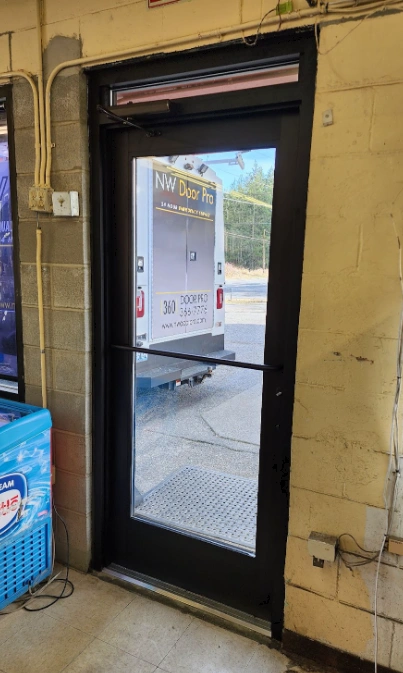
A storefront door usually gives you warning before it fails completely. The trouble is that many businesses wait too long to act. What starts as a sticky door, a loose hinge or a closer that feels a little off can turn into a security issue, a customer safety problem or a locked out morning that disrupts the whole day.
If you have noticed storefront door repair signs at your business, this is the point to pay attention. For commercial properties in Bellingham, Washington, storefront entrances deal with steady foot traffic, changing weather, repeated opening cycles and ongoing wear on closers, pivots, locks and frames. When one part starts failing, the rest of the entry system usually follows.
This guide explains what to watch for, why these issues matter and when it makes sense to bring in a professional commercial door repair company.
What Are the Most Important Storefront Door Repair Signs?
The most serious storefront door repair signs are usually easy to spot once you know what to look for. In practice, most businesses notice operation problems before they notice structural ones.
Door Is Hard to Open or Close
A properly functioning storefront door should move smoothly. If staff or customers have to pull hard, push harder than usual or use extra force to get the door moving, something is already wrong.
This often points to:
- hinge wear
- pivot damage
- frame misalignment
- threshold interference
- a failing door closer
A hard to open entrance is more than an inconvenience. It can frustrate customers, stress hardware and raise accessibility concerns.
Door Will Not Latch Properly
If the door looks closed but does not catch, that is one of the clearest storefront door repair signs. The latch may miss the strike plate because the door has shifted, the closer has lost control or the frame is no longer holding alignment.
This matters because a door that does not latch properly can leave your building unsecured after hours.
Door Is Sagging, Dragging or Scraping
A storefront door that scrapes the threshold, rubs the frame or appears lower on one side often has alignment trouble. Sagging doors are common when pivots, hinges or mounting points begin to wear.
You may notice:
- metal-on-metal rubbing
- visible uneven gaps
- the bottom edge catching the floor
- the lock lining up poorly
That is a strong sign the problem has moved beyond a minor adjustment.
Door Closes Too Fast, Too Slow or Slams
Door closer issues are one of the most common causes of emergency storefront service calls. If the door slams behind customers, drifts shut too slowly or stops short before latching, the closer likely needs adjustment, repair or replacement.
A failing closer can also create safety issues for customers entering or leaving the building, especially during busy hours.
Locks, Exit Devices or Hardware Are Not Working Right
Storefront entrances depend on reliable hardware. If locks stick, panic bars feel loose, handles wobble or the key cylinder becomes inconsistent, the door system is starting to break down.
Often, hardware trouble is not isolated. It can be linked to door movement, frame shift or latch misalignment. That is why a full commercial inspection matters.
Visible Frame, Glass or Threshold Damage
Not every urgent problem starts with operation. Sometimes the warning sign is visible damage.
That may include:
- bent aluminum framing
- cracked glass
- loose fasteners
- worn threshold sections
- damaged weather seals
- gaps around the perimeter of the door
Even when the door still opens, visible damage can lead to water intrusion, poor security and more expensive repairs later.
Why Storefront Door Problems Should Never Be Ignored
Many owners and managers delay service because the door still works, at least partially. That is where costs climb.
A storefront entrance is not a single component. It is a system. When the closer loses control, the hinges take extra stress. When the hinges loosen, the latch stops lining up. When the latch misses, staff push harder and that extra force affects the frame, lock and threshold.
Ignoring early storefront door repair signs can lead to:
- higher repair costs
- reduced security
- customer complaints
- safety incidents
- accessibility problems
- emergency downtime
For commercial properties, the front entrance is part of the customer experience. A door that sticks, slams or looks damaged sends the wrong signal before anyone even walks inside.
Common Causes Behind Storefront Door Failure
Storefront doors wear down for practical reasons, not mysterious ones. The most common causes are repetitive use, exposure and deferred maintenance.
Heavy Daily Traffic
Retail stores, restaurants, offices and medical buildings may put hundreds of cycles on a storefront door each day. Over time, pivots, hinges, closers and latch hardware begin to wear.
Weather Exposure
In Bellingham, doors deal with moisture, wind, temperature swings and seasonal grime. That exposure can affect seals, metal components, fasteners and hydraulic closers.
Improper Adjustments
A closer or hinge that was adjusted incorrectly months ago can slowly create a larger issue. One small misalignment can put strain on the full entrance assembly.
Impact and Rough Use
Carts, deliveries, rushing foot traffic and accidental hits can bend frames, loosen components and knock doors out of alignment.
Delayed Maintenance
Small problems rarely stay small with storefront doors. Loose hardware, worn seals and minor dragging often turn into service calls that could have been prevented earlier.
When a Storefront Door Becomes a Safety, Security or Access Issue
Some door problems are inconvenient. Others need immediate attention.
A storefront door should be treated as urgent when:
- it will not close fully
- it will not latch securely
- it slams shut
- it creates a tripping hazard at the threshold
- it has broken or unstable glass
- panic hardware is unreliable
- customers struggle to open it safely
Accessibility is another major concern. ADA standards apply to places of public accommodation and commercial facilities and accessible doors and entrances are part of that framework. The U.S. Access Board states that the ADA standards cover entrances, doors and gates and ADA.gov explains that businesses and commercial facilities must follow applicable accessibility design standards.
That does not mean every sticking door is automatically a violation. It does mean entrance problems should be taken seriously when they affect safe and usable access.
What Businesses Should Do When They Spot Storefront Door Repair Signs
The right move depends on the severity of the issue, but the general rule is simple: do not wait for total failure.
1. Check Whether the Problem Is Repeating
If the door sticks once, that may not mean much. If staff mention it every day or customers are visibly struggling with it, the issue is real.
2. Look for Related Symptoms
Do not focus on one symptom only. A door that does not latch may also be sagging. A slamming door may also have loose hardware. Connected symptoms usually point to a larger repair need.
3. Avoid Temporary DIY Fixes on Commercial Hardware
Tightening a visible screw is one thing. Changing closer settings, shifting hardware positions or forcing alignment without commercial experience can make the problem worse.
4. Schedule Professional Service Before It Turns Urgent
If you are seeing clear storefront door repair signs, the safest move is to get the entrance inspected by a commercial door specialist.
Businesses looking for next-step service can naturally direct visitors to commercial door services, request a quote, or contact NW Door Pro for help. These pages are present in your current site structure.
Why Professional Repair Matters More Than a Quick Patch
Storefront door issues often look simple from the outside. In reality, the visible symptom is not always the root cause.
For example:
- a bad latch may really be a frame alignment issue
- a slamming door may come from closer failure, mounting stress, or door weight shift
- loose hardware may be the result of repeated misalignment, not just fastener wear
Professional commercial repair matters because it addresses the actual cause, not just the surface symptom.
That is especially important for businesses that depend on secure daily opening, smooth customer access and dependable locking at the end of the day.
Professional Insight: The Cost of Waiting
One of the most expensive mistakes in commercial door maintenance is waiting until the entrance stops working completely.
A business owner may think, “It still closes, so we have time.” Sometimes that is true for a week. Sometimes it fails tomorrow morning.
In real commercial settings, delayed repairs often lead to:
- emergency service instead of planned service
- replacement of multiple components instead of one
- lost time for staff
- interruptions to customers and deliveries
- avoidable damage to surrounding door parts
That is why early action is usually the cheaper decision.
FAQs About Storefront Door Repair Signs
What are the most urgent storefront door repair signs?
The most urgent warning signs are a door that will not latch, a door that slams, broken glass, failing panic hardware, or a storefront entrance that is hard to open safely.
Can a storefront door still need repair if it technically works?
Yes. Many commercial doors still open and close while already showing alignment, closer, or hardware failure. If the operation is inconsistent, noisy, loose, or unsafe, repair is likely needed.
Why does a storefront door stop lining up with the lock?
This usually happens because of hinge wear, pivot wear, door sagging, frame movement, or closer related stress that changes the door’s position over time.
Are storefront door problems a security risk?
They can be. If the latch does not catch, the lock does not engage correctly, or the frame is damaged, your entrance may not secure properly after hours.
Can storefront door issues affect accessibility?
Yes. Entrance problems can affect safe and usable access. Official ADA guidance covers accessible entrances, doors and gates for applicable commercial settings.
Conclusion
The biggest mistake most businesses make is treating early warning signs like minor annoyances. In reality, storefront door repair signs usually appear before a larger operational, safety, or security problem develops.
If your entrance is sticking, sagging, slamming, failing to latch, or showing visible hardware or frame wear, it is time to act. Fast service protects your property, reduces disruption and helps keep your entrance safe for customers and staff.
For businesses in Bellingham, the best next step is to request a professional evaluation before the problem turns into an emergency. You can guide readers to Request for Quote, Contact Us, or your main Services page for the conversion path. Those internal URLs are all visible in your current WordPress pages list.