
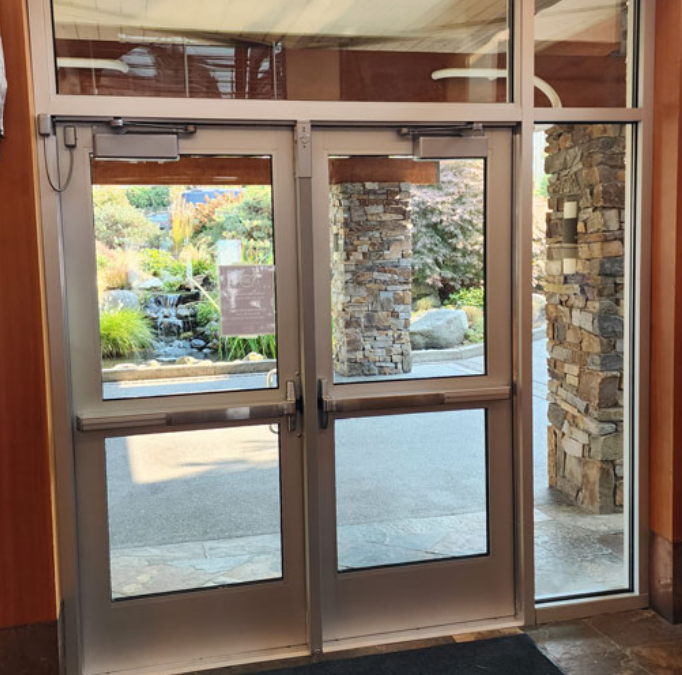
When a commercial door won’t close, it can quickly become a serious problem for businesses. A door that sticks open, drags across the floor or refuses to latch properly can create security risks and interrupt daily operations.
In busy commercial environments across Bellingham, Washington, entrance doors are used constantly. Retail storefronts, restaurants, medical offices, warehouses and office buildings may see hundreds of door openings every day. Over time, this constant use places stress on door closers, pivot hinges and other commercial door hardware.
As components wear down, problems like door sagging, alignment issues and failing door closers begin to appear. Understanding the causes behind these problems helps business owners and facility managers determine when professional commercial door repair is needed.
Why a Commercial Door Won’t Close Properly
Commercial doors function as part of a complete commercial entrance system. Multiple components must work together for the door to close smoothly.
When one part fails or becomes misaligned, the entire door system may stop working correctly.
Common reasons a commercial door may not close include:
- worn door closers
- commercial door alignment issues
- damaged pivot hinges
- threshold damage
- door latch problems
- loose commercial door hardware
These issues often develop slowly as commercial doors experience daily traffic.
For example, storefront doors in retail centers or restaurants may open thousands of times each week. Over time, this repeated use can affect door alignment and hardware performance.
What Causes a Commercial Door to Stop Closing?
Door Closer Failure
Door closers control the speed and force at which a door closes. When a closer begins to wear out, it can prevent the door from shutting properly.
Signs of a failing door closer include:
- the door slamming shut
- the door closing too slowly
- the door stopping before it latches
- the door drifting open
Most commercial door closer repair issues involve worn seals or hydraulic pressure loss. In many cases, technicians can adjust the closer. However, older units may need replacement.
Door Alignment Problems
Door alignment is one of the most common reasons a commercial door won’t close properly.
Commercial doors must align precisely with the frame and strike plate. If the door shifts even slightly, the latch may not connect correctly.
Alignment problems may occur due to:
- building movement
- worn pivot hinges
- loose hardware
- frame damage
When alignment is off, the door may drag, stick or bounce back after closing.
Professional technicians adjust hinges, pivots and frame alignment to restore smooth operation.
Worn Pivot Hinges
Many aluminum storefront doors rely on pivot hinges rather than traditional hinges.
These pivots support the full weight of the door. Over time, pivot hardware may wear out and cause:
- door sagging
- uneven closing
- scraping along the threshold
- difficulty latching
Replacing worn pivots often restores proper door balance and alignment.
Threshold or Floor Interference
Sometimes the problem is not the door itself but the threshold or flooring beneath it.
Loose thresholds or shifting flooring can cause the bottom of the door to drag, preventing it from closing properly.
Common causes include:
- threshold damage
- floor height changes
- debris buildup
- worn weather seals
A technician will inspect the entire entrance system to identify the exact cause.
Panic Hardware and Door Latch Problems
Commercial buildings often use panic hardware or exit devices for emergency egress.
When these components become worn or misaligned, the door may close but fail to latch.
Typical causes include:
- worn latch bolts
- misaligned strike plates
- loose panic hardware
Repairing these components restores both security and safe emergency exit function.
Why This Problem Should Not Be Ignored
A commercial door not closing properly can create several risks for businesses.
These may include:
- reduced building security
- energy loss from open doors
- safety concerns for employees and customers
- accessibility problems
Entrance doors are also critical for maintaining safe emergency exits and ADA compliant doors.
Organizations like the Door Security and Safety Foundation provide trusted guidance on maintaining safe and compliant commercial door systems.
Prompt repair helps protect both the building and the people inside it.
How Professional Technicians Repair Commercial Door Issues
Repairing a commercial door involves diagnosing the entire entrance system.
Typical repair steps include:
- inspecting the door frame and door alignment
- testing door closers and pivot hinges
- examining commercial door hardware
- checking latch and strike plate alignment
- adjusting door closer tension
- replacing worn hardware components
These repairs restore smooth door operation and prevent further damage.
Businesses experiencing problems with a storefront door won’t close situation may need professional
commercial door repair in Bellingham.
Why Storefront Doors Often Develop Closing Problems
Most retail and commercial buildings use aluminum storefront doors as part of modern commercial entrance systems.
While durable, these systems rely on precise alignment and hardware performance.
Several factors contribute to closing problems:
- heavy customer traffic
- aging door closers
- pivot hinge wear
- weather exposure
- building settling
Businesses in Bellingham and Whatcom County may also experience increased moisture exposure, which can accelerate hardware wear.
Routine inspections help identify issues before they become serious.
When Should a Business Call a Commercial Door Technician?
A business should schedule service if they notice:
- the door dragging across the floor
- the door slamming shut
- the door failing to latch
- the door drifting open
- visible damage to hinges or hardware
Early repair prevents larger problems and helps maintain safe building access.
Preventing Future Commercial Door Problems
Preventative maintenance can significantly extend the lifespan of commercial doors.
Recommended maintenance includes:
- inspecting pivot hinges and hardware
- tightening loose door hardware
- adjusting door closers
- inspecting thresholds and weather seals
- testing panic hardware and locks
Facility managers who schedule routine commercial door maintenance often avoid emergency repairs.
Regular inspections also help ensure doors remain compliant with accessibility and safety standards.
FAQs
Why does my storefront door close halfway and stop?
This usually indicates a door closer issue or hinge misalignment. The closer may require adjustment or replacement.
Can a commercial door closer be repaired?
Yes. Many door closers can be adjusted or rebuilt. However, severely worn units are often replaced.
How long do commercial door closers last?
Most commercial door closers last 7–10 years, depending on usage and maintenance.
Is a commercial door that won’t close a security risk?
Yes. Doors that fail to latch properly can compromise building security and allow unauthorized access.
Conclusion
When a commercial door won’t close, the problem is often related to worn door closers, pivot hinge damage, alignment problems or failing commercial door hardware.
Although these issues may start small, they can quickly affect building security and daily business operations.
Businesses across Bellingham and Whatcom County rely on properly functioning commercial entrance systems to maintain safe and accessible buildings.
NW Door Pro provides expert commercial door repair, storefront door repair and commercial door hardware repair services throughout Bellingham.
If your storefront or commercial entrance door is sticking, dragging or failing to latch, professional repair can restore smooth and reliable door operation.