
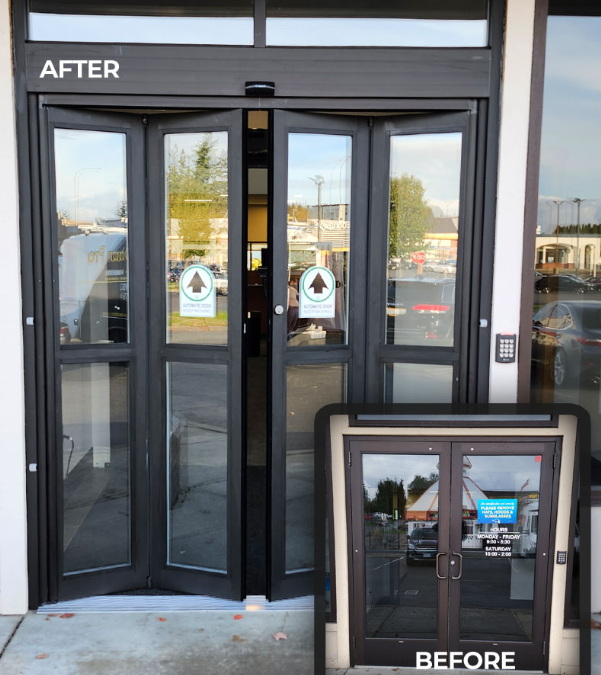
Storefront door failure is one of the most frequent problems affecting commercial building entrances. Business owners often notice that exterior storefront doors begin to sag, stick or stop closing properly long before interior doors show any signs of wear.
The reason is simple. Storefront entrances handle far more stress than interior doors. They support heavy aluminum and glass door systems, operate constantly throughout the day and face weather exposure that interior doors never experience.
In commercial districts throughout Bellingham, Washington, storefront doors in retail stores, restaurants, medical offices and office buildings may open hundreds of times daily. This constant use places tremendous pressure on commercial door hardware and entrance systems.
Understanding why storefront door failure happens can help property managers detect problems early and schedule professional repairs before the damage spreads.
What Is Storefront Door Failure?
Storefront door failure refers to mechanical or structural problems that prevent a commercial entrance door from operating correctly.
Most storefront entrances use aluminum storefront doors with glass panels designed for durability and visibility. These commercial entrance systems rely on specialized components that work together to support heavy doors.
When any part of the system begins to fail, the entire door operation is affected.
Common signs include:
- storefront door not closing properly
- door sagging or dragging across the threshold
- storefront door alignment issues
- door closer slamming or failing to latch
- damaged panic bars or exit devices
- loose pivot hinges
- worn commercial door hardware
These issues usually indicate developing storefront door problems that require professional repair.
Why Storefront Doors Fail More Often Than Interior Doors
Heavy Daily Traffic
The biggest reason storefront door failure occurs is simple mechanical wear.
Interior doors inside an office might open dozens of times per day. A storefront entrance in a busy commercial location may open hundreds or even thousands of times daily.
Every time the door opens and closes, several components absorb the load:
- pivot hinges
- commercial door closers
- latch hardware
- aluminum door frames
Over time, these components wear down. When hinges loosen or door closers weaken, the door begins to shift out of alignment.
Once misalignment begins, storefront door failure accelerates.
Exposure to Weather Conditions
Interior doors operate in controlled indoor environments. Storefront entrances do not.
Commercial buildings in Bellingham and Whatcom County regularly experience:
- heavy rainfall
- coastal humidity
- temperature changes
- wind pressure
Moisture and temperature fluctuations gradually affect metal door components.
For example:
- moisture can cause corrosion in door hardware
- temperature changes can expand or contract aluminum door frames
- wind pressure stresses door closers and pivot hinges
These environmental factors are major contributors to storefront door failure.
Heavier Commercial Door Systems
Storefront doors are significantly heavier than interior doors.
Most commercial storefront entrances use aluminum and glass entrance systems, which provide durability and visibility for businesses.
However, the additional weight increases pressure on key components such as:
- pivot hinges
- floor closers
- overhead door closers
- door frames
If these components begin to wear, the door may start sagging or dragging across the threshold.
Heavy door systems amplify alignment problems. Even small shifts can cause operational issues.
How Commercial Door Hardware Causes Storefront Door Failure
Commercial storefront doors rely on specialized hardware to operate safely.
Over time, heavy usage can cause wear in several key components.
Pivot Hinges
Pivot hinges support the full weight of the door. If they become loose or worn, the door begins to sag and scrape against the frame.
Door Closers
Commercial door closers regulate how quickly a door opens and closes.
When door closers fail, problems often include:
- doors slamming shut
- doors failing to latch
- inconsistent closing speed
These issues can create safety risks and accessibility problems.
Panic Bars and Exit Devices
Many commercial buildings require panic hardware for emergency exits.
Frequent use can wear down internal mechanisms, eventually requiring commercial door hardware repair.
Why Door Alignment Is Critical for Storefront Entrances
Door alignment plays a major role in preventing storefront door failure.
Even small alignment shifts can create multiple problems:
- storefront doors rubbing against the frame
- doors dragging across thresholds
- commercial door closers working harder than intended
- accelerated hardware wear
When misalignment continues, it can damage door frames and glass panels.
Businesses experiencing these issues should consider scheduling professional service such as
commercial door repair in Bellingham to restore proper alignment and prevent further damage.
How Storefront Door Failure Affects Businesses
Storefront door failure can disrupt normal business operations.
Commercial entrances are critical access points for customers, employees and deliveries.
When doors malfunction, businesses may experience:
Security Risks
Doors that fail to close properly can leave buildings vulnerable outside business hours.
Accessibility Issues
Doors that are difficult to open may create accessibility concerns.
The Americans with Disabilities Act accessibility requirements mandate accessible entrances for many commercial buildings.
Customer Experience Problems
A sticking or slamming storefront door creates a poor first impression for customers entering the building.
Expensive Structural Damage
If minor storefront door problems are ignored, hardware failure can eventually damage the door frame or glass system.
Early repairs usually prevent costly replacements.
How to Prevent Storefront Door Failure
Routine maintenance significantly reduces the risk of storefront door failure.
Commercial door systems should be inspected regularly to ensure all components remain properly aligned and functioning.
Preventive maintenance often includes:
- inspecting pivot hinges
- adjusting door closers
- tightening loose door hardware
- checking door alignment
- lubricating moving components
- inspecting thresholds and seals
Regular inspections help property managers identify storefront door problems before they lead to major repair costs.
When Businesses Should Schedule Commercial Door Repair
Professional repair should be scheduled if a storefront door shows signs such as:
- storefront door not closing properly
- door sagging or dragging
- door closer leaking hydraulic fluid
- grinding or scraping noises
- visible door misalignment
These issues typically indicate deeper mechanical problems within the commercial entrance system.
Prompt repairs can prevent additional damage and restore safe operation.
Why Professional Storefront Door Repair Matters
Commercial door systems require precise adjustments.
Improper repairs can worsen alignment problems or damage door hardware.
Professional technicians understand how to repair complex entrance systems involving:
- aluminum storefront doors
- commercial door closers
- pivot hinge assemblies
- panic bars and exit devices
- commercial glass entrance doors
Professional repair services also help ensure compliance with commercial building safety standards.
Commercial Door Repair Services in Bellingham
Businesses experiencing storefront door failure should address the issue quickly to avoid safety risks and operational disruptions.
NW Door Pro provides commercial door repair services for businesses throughout Bellingham and surrounding Whatcom County communities.
Services include:
- commercial storefront door repair
- commercial glass door repair
- storefront door closer repair
- commercial door hardware repair
- emergency storefront door repair
Professional repairs help restore smooth door operation and extend the lifespan of commercial entrance systems.
FAQs
Why do storefront doors fail faster than interior doors?
Storefront doors handle significantly more traffic and environmental exposure than interior doors. The combination of heavy usage, weather exposure and heavier door construction accelerates wear on door hardware.
What causes storefront door misalignment?
Misalignment usually occurs when pivot hinges wear down or door frames shift due to repeated usage and environmental factors.
Can storefront door failure be repaired?
Yes. Many storefront door problems can be repaired by replacing worn hinges, adjusting door closers or correcting alignment issues.
How often should storefront doors be inspected?
High traffic commercial doors should typically be inspected at least once per year to identify hardware wear and alignment issues early.
Conclusion
Storefront door failure occurs more frequently than interior door problems because exterior entrances operate under far greater stress. High customer traffic, exposure to weather and heavy aluminum storefront door systems all contribute to accelerated wear.
For businesses in Bellingham, Washington, maintaining a properly functioning storefront door is essential for safety, accessibility and security.
When storefront door problems begin to appear, addressing them early helps prevent costly damage and keeps commercial entrances operating smoothly.
If your storefront door is sagging, sticking or failing to close properly, professional repair can restore safe and reliable operation.
NW Door Pro provides experienced commercial door repair services for businesses throughout Bellingham and nearby communities.